
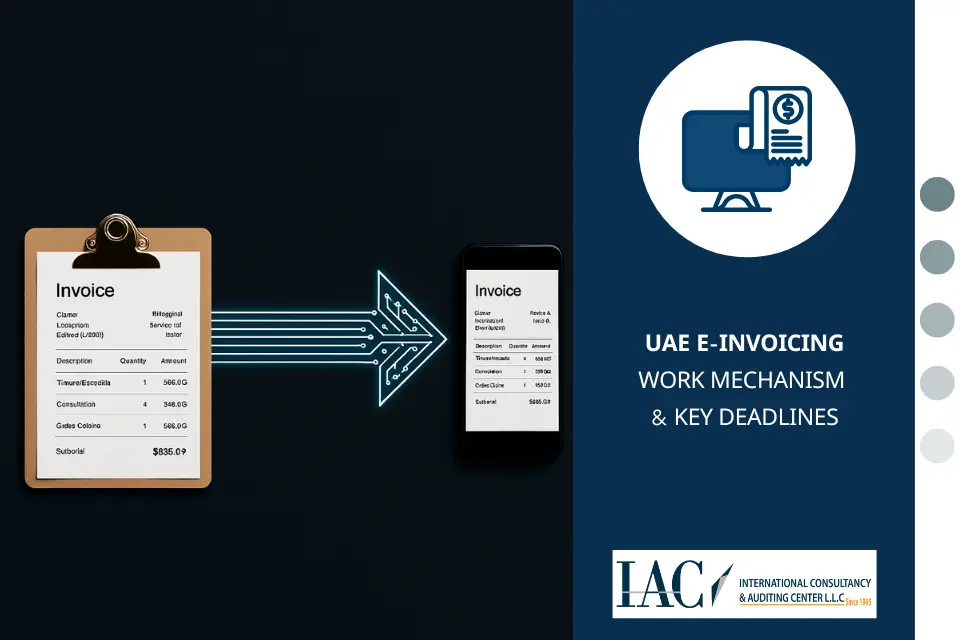
UAE E-Invoicing – Work Mechanism & Key Deadlines
As part of the UAE’s national digital transformation strategy, the Federal Tax Authority (FTA) is implementing a mandatory E-Invoicing system for all VAT-registered businesses. This framework aims to standardize the creation, exchange, validation, and reporting of tax invoices across the country, ensuring efficiency, accuracy, and compliance.
This article explains how the E-Invoicing system works and highlights the key deadlines that businesses must adhere to.
How the UAE E-Invoicing System Works
The UAE E-Invoicing framework introduces a structured digital workflow that guarantees transparency and compliance with VAT regulations. The process consists of several key steps:
1. Digital Invoice Creation
All tax invoices and credit/debit notes must be generated in a structured electronic format (handwritten or standard PDFs are not allowed). Required fields include:
- Supplier information
- Customer information
- VAT Registration Number
- Invoice amount
- VAT amount
- QR code
2. Real-Time Validation
Invoices are electronically transmitted to an Accredited Service Provider (ASP). The ASP validates the invoice to ensure it meets FTA standards before sending it to the recipient.
3. Reporting to the Federal Tax Authority
Once validated, invoice data is securely sent to the FTA’s E-Invoicing platform in real-time or near-real-time.
4. Delivery to the Buyer
After successful validation, the buyer receives the invoice electronically via the ASP or the company’s accounting/ERP system.
5. Secure Digital Storage
All e-invoices must be stored electronically and remain accessible for audits and compliance checks.
Key Deadlines You Must Follow
Engaging an Accredited Service Provider (ASP)
-
Large Businesses (Turnover ≥ AED 50 million): Deadline 31 July 2026
-
Small and Medium Enterprises (Turnover < AED 50 million): Deadline 31 March 2027
Mandatory Go-Live Dates
-
Large Businesses: 1 January 2027
-
SMEs: 1 July 2027
-
Government Entities: 1 October 2027
Optional Early Adoption
Voluntary early implementation is available starting 1 July 2026, allowing companies to test and transition smoothly before the mandatory phase.